Car Protective Film

Wholesale Car Protective Film Manufacturer


Haining Gaosheng Protective Film Co., Ltd., is a professional enterprise integrating R&D, production and sales of various surface protective films. Our products include Carpet Protection Film, Floor Protection Film, Tile Protection Film, Marble Protection Film, Glass Protection Film, Barrier Film, Stainless Steel Protection Film, Aluminum Protection Film, Anti-Static Film, Metal Protection Film, Household Appliance Protection Film, Car Protective Film, Packaging Stretch Film, Packaging Tape.


Why Choose Us?

Rich Experience

Haining Gaosheng Protective Film Co., Ltd. was established in 2002. After 20 years of intensive cultivation, it has become an enterprise with a certain reputation and customer trust in the industry.


Wide Range of Applications

Our products are widely used in industries such as aluminum-plastic panels, stainless steel panels, color steel panels, galvanized panels, glass, stone, electronics manufacturing, home appliances, automobile manufacturing, and high-end furniture.

Advanced Equipment

We have a full set of advanced film blowing equipment, printing equipment and a number of coating lines and cutting lines.

Professional Technical Team

We have an excellent and professional team with over 30 people working on researching, producing and sale.


First 12 Last

Brief Introduction to Car Protective Film


Car Paint protection film, also referred to as clear bra or a "wrap", is a thin layer of flexible material placed over a vehicle's body panels to protect them from flying rocks or road debris. This type of protective film can even save your car's paint from light hail damage or low-speed scrapes that would normally scratch and scar the finish.


What are Advantages of Car Protective Film?
 

Scratch and Impact Resistance

One of the standout features of Car Protective Film is its remarkable ability to shield your vehicle’s paint from scratches, chips, and minor impacts. Whether it’s a rogue pebble on the highway or an accidental bump in a parking lot, Car Protective Film acts as an invisible armour, preserving your car’s aesthetic appeal and maintaining its resale value. Say goodbye to those unsightly blemishes on your car’s surface.

Chemical and Stain Resistance

Car Protective Films are engineered to withstand various chemicals, including harsh cleaners and environmental pollutants. This robust resistance protects your car’s paint from unsightly stains, discolouration, and itching caused by substances like bird droppings, tree sap, and road tar. With Car Protective Film in place, you can drive confidently, knowing your car’s finish is well-guarded.

UV Protection

Car Protective Film doesn’t just shield your car from physical harm; it also offers excellent UV protection. By reducing the amount of harmful ultraviolet radiation that reaches the paint, Car Protective Film slows down the oxidation process. This means your car’s paint will resist fading, maintaining its shine and colour integrity over time. Enjoy a car that looks as good as new, even after years on the road.

Customization and Enhancement

Car Protective Film is not just about protection; it’s also about style. These films come in various finishes, including gloss, matte, and textured options. This allows for endless possibilities in customizing your car’s look without permanently altering the original paint. Transform your vehicle to match your unique taste and personality.

Ease of Maintenance

Vehicles with Car Protective Film are a breeze to maintain. The slick surface of the film makes it difficult for dirt and debris to adhere. As a result, washing and drying become more straightforward and quicker processes. Spend less time cleaning and more time enjoying your pristine-looking car.


Cost-Effective in the Long Run

While the initial investment in Protective Film may seem significant, it proves to be cost-effective in the long run. By reducing the need for frequent paint touch-ups, detailing, and potential re-painting, Car Protective Film saves you money over time. Protecting your car’s paint is not just an expense; it’s an investment that pays off in preservation and peace of mind.


What are Features of Car Protective Film?
 

Clarity and Transparency
One of the key CPP Film Propertiesis their excellent clarity and transparency. These films provide a clear, glossy appearance, allowing for enhanced product visibility and presentation. The high transparency of CPP films enables consumers to see the packaged product, which is particularly beneficial for showcasing the quality and attractiveness of various items.


Flexibility and Formability
CPP films exhibit remarkable flexibility, making them highly suitable for packaging products of different shapes, sizes, and dimensions. They can easily conform to the contours of the packaged items, providing a snug fit and optimal protection. The inherent flexibility of CPP films allows for easy folding, twisting, and wrapping, enabling efficient packaging operations and versatile applications.


Heat Sealability
CPP films possess excellent heat sealability, which is a crucial property for packaging materials. These films can be heat sealed using various techniques, ensuring secure and tamper-evident packaging. The heat sealing process creates a strong bond between the film layers, maintaining the freshness and integrity of the packaged products. CPP films’ heat sealability also facilitates efficient packaging operations, improving productivity and reliability.


Moisture and Gas Barrier
CPP films offer good moisture and gas barrier properties, providing effective protection for the packaged items. These films act as barriers against moisture, preventing the ingress of water vapor that could compromise product quality and shelf life. Additionally, CPP films help to inhibit the passage of gases, such as oxygen and odors, preserving the freshness and flavor of food products. The barrier properties of CPP films contribute to maintaining the overall quality and integrity of various packaged goods.


Printability and Graphics
CPP films provide a smooth and printable surface, allowing for vibrant and high-quality graphics. This property is advantageous for branding, product information, and promotional purposes. The printable surface of CPP films enables the application of detailed and visually appealing designs, enhancing the overall packaging aesthetics. With excellent ink adhesion and clarity, CPP films ensure that the printed graphics are sharp, vibrant, and long-lasting.


Tear Resistance and Durability
CPP films are known for their exceptional tear resistance and durability. These films exhibit excellent strength, allowing them to withstand rough handling, transportation, and storage conditions. The tear resistance of CPP films ensures that the packaging remains intact, preventing damage or product loss. The durability of CPP films contributes to the overall protection and longevity of packaged goods, offering reliable packaging solutions.


Recycling and Sustainability
CPP films can be recycled, contributing to a more sustainable packaging approach. Manufacturers are increasingly adopting eco-friendly practices by using recycled materials and exploring biodegradable alternatives. The recyclability of CPP films aligns with the growing demand for sustainable packaging solutions, allowing businesses to reduce their environmental footprint.


Types of Car Protective Film

General Purpose Cast Polypropylene Film
This is a versatile film that is suitable for a wide range of applications, including:
Food packaging
Industrial packaging
Lamination
It has good clarity, heat sealability, and mechanical properties.


Metallized Cast Polypropylene Film
The metalized CPP film is coated with a thin layer of metal (usually aluminum) to provide a metallic appearance and improve its barrier properties. It is commonly used for high-barrier applications, such as packaging for snacks, coffee, and pet food.

Retort Cast Polypropylene Film

This film is designed for use in retort packaging applications, where the packaged product is heated to high temperatures (up to 130°C) to sterilize it. It has an excellent heat resistance and stability to withstand the retort process.

Anti-Fog Cast Polypropylene Film

This film is treated with an anti-fog agent to prevent fogging and maintain clarity in high-moisture environments. It is commonly used for packaging fresh produce, meat, and dairy products.

Solid White Cast Polypropylene Film

This film is designed to provide an opaque, white appearance for packaging applications where product visibility is not required. It is commonly used for packaging products that require protection from light, such as pharmaceuticals and medical devices.


Applications of Car Protective Film


Automotive Exterior Parts and Surface Protection
Flawless, that’s what customers expect when they pick up their new car. For most, a new car is one of the most expensive purchases they will make, and it has to be perfect. Our line of protective films protects body parts, wheels, bumpers, trim, lights, and emblems. Although the odometer shows zero, vehicles have often traveled thousands of miles before you pick up your new car at the dealership. In transit, cars are exposed to many factors that can cause severe damage, from acids in bird droppings to stone chippings and metal shavings and the harsh effects of UV. Films protect high gloss finishes, glass, and painted plastic parts in vehicles to ensure 100% damage prevention and a perfect customer experience.


Automotive Interior Parts and Surface Protection
Few people realize that entire teams of engineers are working today to design the interiors of future vehicles that will be launched 3-5 years from now. Continuous improvements and development of new materials, textures, and finishes shape ever-changing high-end interior designs to create a luxurious and comfortable driving experience. With this comes the need for tailored solutions to protect delicate interior trim, displays, carpet, upholstery, door panels, and other parts during production, processing, assembly, and delivery.


RV, Specialty Vehicle & Boat Parts and Surface Protection
Boats, trucks, RVs, and motorcycles all contain critical surfaces that need to remain flawless for the ultimate end-user. These surfaces need to stay scratch and contamination-free, whether they are plastic injection molded parts, stainless steel, or interior carpet and fabrics. Our range of adhesive films will protect these surfaces during all the stages of manufacturing, assembly, and delivery.


Aviation & Aerospace Parts and Surface Protection
Protect aircraft surfaces using films so that they can look better and last longer. Whether you need protection for your aircraft's interior and exterior, or you are building commercial, defense, military, or space applications – our experts can deliver solutions to meet your specific application needs. Our films protect against moisture and scratches and work on various surfaces, from carpets to seats and everything in-between.


Train & Subway Parts and Surface Protection
The railway industry, much like aerospace, needs films that will last longer and do well in various shipping situations. Our films are designed to support the unique needs of trains and subways – they can be applied for longer durations, for interior and exterior applications.


The Considerations for Buying
Self-adhesive Protective Film for Car

Durability

Take into consideration the environment where the object or graphics that is to laminated will be kept. You need to understand that the film is directly related to the environmental conditions such as exposure to light, moisture, temperature and so on. There are different qualities of films available in the market. Therefore, keep the environment factor in mind while choosing the film.

Self-adhesive Protective Film for Car

Ease of Lamination

The thickness of the film plays a vital role in the rigidity/conformability ratio. As the thickness of the film increases the more rigid it is. Thick film is used to laminate graphics that need to lay flat and remain like that. For curved or uneven substrates, you should consider using thin films.


Self-adhesive Protective Film for Car

Quality of the Laminating Films

Choose high-quality films from a reputed brand. Though it may seem cost-effective to buy low-priced laminating films initially, in the long run, it could prove to be costly. The reason is these films can deteriorate quickly and cause damage to the objects that they were supposed to preserve and protect.

Clear Protection Film for Auto Part

Adhesive

This again plays a vital role in enhancing the aesthetics of the lamination. Therefore, it is highly recommended that you choose the right kind as well as top quality adhesives that is required for your lamination films.


Our Certificate

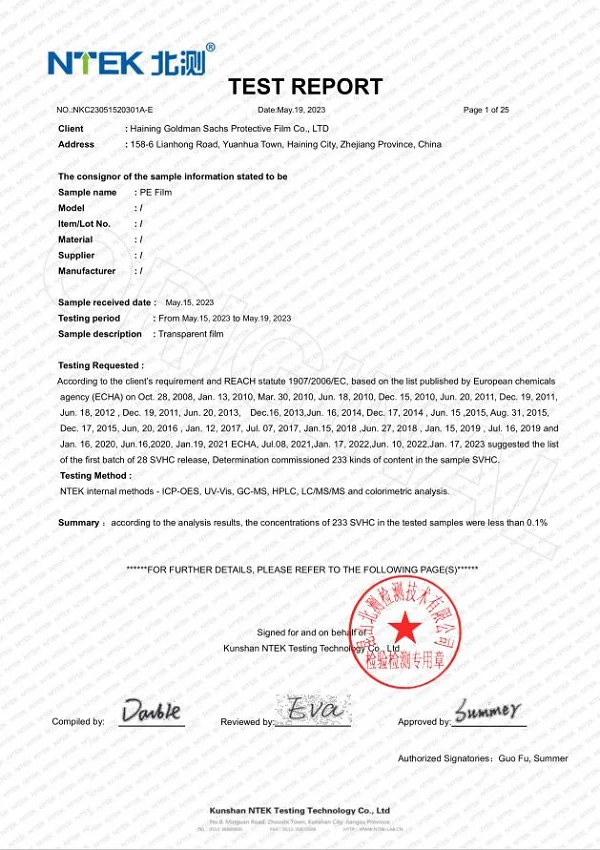
Our company have approved by ISO9001 International Quality System Certification, MSDS Report, ROHS Report and REACH Report, strictly carried it out in the process of research, production and selling.

 

productcate-1-1
productcate-1-1
productcate-1-1
productcate-1-1


Our Factory

The company has advanced printing equipment and coating equipment, adopts strict quality inspection system, and has passed ISO9001 management system certification for many years. The company always adheres to the tenet of building the foundation of quality, establishing the monument of quality, and raising the sail of the brand.

productcate-1-1
productcate-701-349
productcate-702-344


Contact Us


Name:

Serena

1

>>

Phone:

+86-18867669661

+86-18324364871

2

>>

Email: 1525262631@qq.com

3

>>

What's up/Wechat:

+86-18324364871

4

>>

Address:

No. 158-6, Lianhong Road, Yuanhua Town, Haining City, Jiaxing City, Zhejiang Province

5


Frequently Asked Questions


Q: What are the benefits of using Car Protective Film?

A: Protects Against Chips and Scratches
Protective Film is the best solution if you’re worried about your pride and joy getting scratched and chipped, which makes it a very popular option for brand-new vehicles. Although Protective Film is not indestructible, it does provide a durable layer of protection against this kind of mechanical damage.
Bare paintwork is highly susceptible to clear coat scratches and stone chips which quickly deteriorate the vehicle’s overall condition. Ceramic coatings offer some protection, but they don’t come close to the level of protection that Protective Film provides.
This is why Protective Film is a great option to protect the front-end and windshield of the car.
Even relatively new vehicles which are less than a year old will usually have several stone chips on the bonnet and front bumper, particularly if they are frequently driven on high-speed roads.
Not only do rock chips look unsightly, but they also expose the bare metal which can corrode and rust.
Protective Film will also provide some protection against swirl marks and wash marring, which again bare clear coat is very susceptible to. It can even help to shield the car from minor door dings.
 
Self-Cleaning Characteristics
If keeping your car cleaner between washes is something that interests you, then applying Protective Film is a great option.
Most high-quality paint protection film on the market is very hydrophobic. This means that it is able to repel muddy water which is splashed up onto the vehicle when driving in the rain. The result, is that the car will stay looking fresher for longer.
It’s important to be realistic and understand that Protective Film will not keep the car clean indefinitely. To get the most out of the protection it’s still important to wash it fairly regularly to keep it in good condition, but it is useful for those who drive their cars frequently and struggle to keep it clean between washes.
This property is also offered by ceramic coatings and is one of the main reasons why they are so highly regarded. Protective Film goes a step further by not only helping to keep the car cleaner, but also by providing much more protection against chips and scratches.
 
UV Protection
The clear coat layer of paint on a car does protect the colour underneath from UV rays, but it can still fade over time. One of the most crucial benefits of Protective Film is that it actually shields the clear coat from UV damage to keep the colour underneath looking vibrant and new.
A concern that some people have about Protective Film is regarding it cracking and fading in the sun, however good quality Protective Film will not do this. This is why it’s vital to get the Protective Film installed by an experienced professional who uses reputable paint protection film products.
 
Chemical Resistance
Protective Film is able to shield the paintwork underneath from potential stains and damage that can occur from exposure to chemicals. Although it may not be obvious at first, cars are actually subjected to numerous chemicals on a regular basis.
Bird poo is very acidic and can etch clear coat paint.
Water spots can also damage a car’s finish permanently.
Iron fallout can stick to the paintwork. It is produced by the brake discs and can also be collected by parking the car near train tracks or industrial plants.
Tar spots can be flicked up onto the paint when driving on recently resurfaced roads or in hot weather.
Road salt is also corrosive.
It’s still advisable to clean the Protective Film frequently to avoid it getting damaged, but in all cases, it acts as a barrier between the paintwork and the chemicals.
 
Enhances the Finish
Many Protective Film products boast a high-gloss finish which doesn’t lose its shine over time due to its chemical and abrasion resistant properties. The preparation process required prior to Protective Film installation also involves correcting and refining the paintwork via machine polishing to achieve a mirror-like finish.
 
Improves the Resale Value
This really ties all the other benefits together. By protecting your car with Protective Film, you’ll keep it looking as new as possible, for as long as possible.
Not only does that mean you’ll get the benefits of a stunning looking car for years to come, but it also means the car will command a higher price when you come to sell it as the bodywork will be in better condition than the vast majority of cars of a similar age.
Even if your car is leased, you’ll still reap the benefits as you’re much less likely to get hit with a wear and tear charge.

Q: What is CPP Protective Film?

A: Polypropylene film or PP is a low density plastic film. The most important types of PP are cast polypropylene (CPP) and bi-axially oriented polypropylene (BOPP). While BOPP is a more commonly known polypropylene film, the use of CPP in the food, pharmaceutical, flower, textiles and several other industries are consistently gaining popularity.
Some of the differences between CPP and BOPP are listed below for better understanding:
CPP is a soft film like polyethylene, whereas BOPP is a bit stiff and crinkly
CPP does not dead-fold well due to its natural living hinge, whereas BOPP has better dead-fold characteristics.
CPP can be ultrasonically or thermally sealed without the use of any specialty coatings, whereas BOPP does not heat seal well without the use of specialty heat seal coatings.
While BOPP films have better barrier properties than CPP, CPP has better barrier properties than most other polyethylene and PVC films.
Cast polypropylene film is gaining favour as the material of choice in both traditional flexible packaging as well as non-packing applications. CPP has a higher tear and impact resistance, and better cold temperature performance and heat-sealing properties as compare to BOPP. There are various type of CPP films like general CPP, retort grade CPP, metalized CPP, solid white CPP and several other applications depending on the requirement and end application.
Some of the major benefits of CPP are listed below:
Excellent heat seal strength, high puncture and tear resistance
Excellent packaging integrity at extreme temperatures and high heat resistance
No impact on the coefficient of friction (COF) control
High yield per unit area and low specific weight (0.91 g/cm3)
Offers good moisture barrier
High transparency.

Q: In what industries can CPP Protective Film be applied?

A: Optoelectronics industry: Apply electronic parts protection, and structured optical film protection, such as diffuser film, brightness enhancement film, light guide film, and other special films.
PCB industry: Suitable for electroplating process protection of printed circuit board process, or used as electroplating masking tape.
Plastic industry: It is used in plastic products and plastic parts with a smooth surface to protect plastic appearance parts, which may cause impact or paint peeling.
Glass industry: PP protective film has high transparency and can protect glass panels, ITO glass, mobile phone panels, colored steel plates, and optical components such as polarizers, color filters, etc.
Metal industry: It has excellent protection for metal plates with hairline texture or matte structure, such as stainless-steel plates, such as mirror steel plates, hairline steel plates, etc., and anodized aluminum plates and other metal protection.
Other applications: Color decorative plate protection, automotive decorative instrument panel protection, home appliance shell protection, and other industrial use.

Q: What is the Difference Between PP Film and CPP Film?

A: CPP film is cast polypropylene. The plastic is plasticized and melted through an extruder, extruded through a T-shaped structure forming die, cast in a sheet shape onto a chilled casting roll for rapid cooling, and then pulled and trimmed to wind the product.
CPP films have several properties:
Higher stiffness than PE film.
Excellent moisture and odor barrier properties.
Customized formulation to produce more functional membranes.
No solvent is used in the production process, which is relatively environmentally friendly.
With a lightweight, high strength, high toughness, and excellent impact resistance, the first choice for composite materials.
The biggest difference between CPP film and OPP film is whether the film is stretched or not. OPP is a stretching process to enhance the properties of the film. Although the CPP film is not stretched, the formula can be adjusted according to customer needs, so that its application becomes more extensive and there are more changes. Such as: changing the color of the film, matte surface, bright surface, anti-fog, printing, etc. Various functional PP films can be produced with different formulations.

Q: What Sets CPP Films Apart?

A: Cast Polypropylene (CPP) films are a type of plastic packaging material known for their exceptional clarity, flexibility, and moisture resistance. Unlike other films, CPP is produced using a cast film extrusion process, resulting in a unique combination of properties that make it ideal for various applications.
Transparency: CPP films boast remarkable clarity, allowing products to be showcased attractively while providing visibility to consumers.
Flexibility: The inherent flexibility of CPP makes it suitable for packaging a wide range of products, from snacks to textiles, without compromising on durability.
Moisture Barrier: CPP films act as a reliable barrier against moisture, preserving the freshness and integrity of packaged goods.
Applications of CPP Films
Packaging Perfection
In the packaging industry, CPP films have become the material of choice for various applications.
 
Food Packaging
CPP’s exceptional moisture resistance makes it an ideal candidate for packaging perishable goods. From snacks to frozen items, CPP ensures that the contents remain fresh and free from external contaminants.
 
Textile Industry
The flexibility of CPP films finds its place in the textile industry, where it is used for packaging fabrics and garments. The transparency of the film allows consumers to inspect the product without compromising its quality.
 
Medical Packaging
In the medical field, the sterile nature of CPP films makes them suitable for packaging medical devices and pharmaceutical products. The moisture barrier adds an extra layer of protection to ensure the integrity of sensitive items.

Q: What are the characteristics of CPP Protective Film?

A: It has the characteristics of good transparency, high gloss, good stiffness, good moisture resistance, excellent heat resistance, and easy heat sealing. CPP film is printed and bagged, and is suitable for: clothing, knitwear and flower packaging bags; document and photo album film; food packaging; and metallized film for barrier packaging and decoration. Potential uses also include: food packaging, candy packaging (twisted film), pharmaceutical packaging (infusion bag), replacing PVC in photo albums, folders and documents, synthetic paper, self-adhesive tape, business card holders, ring folders And standing bag composite material.
CPP has excellent heat resistance. Since the softening point of PP is about 140°C, this type of film can be used in hot filling, retort bags, aseptic packaging and other fields. Coupled with excellent resistance to acid, alkali and grease, it becomes the first choice for bread product packaging or laminate materials. It is safe in contact with food, has excellent performance, does not affect the flavor of the food inside, and can choose different grades of resin to obtain the required characteristics.
As mentioned above, the production process of cast film generally adopts the T-die method. The characteristics of this method are:
The casting method eliminates the film blowing stage of the tube film method, which is easy to drive and has less waste;
In the production by casting method, the chemical molecules are arranged in an orderly manner, so it is beneficial to improve the transparency, gloss and thickness uniformity of the film, and is suitable for advanced packaging;
The casting part adopts electric up and down swing and back and forth movement structure, which is easy to operate;
The corona part is air-cooled and water-cooled, and the product is not easy to deform.
The extruder first melts the raw material resin, and the molten resin is cast on the cooling roller with a smooth surface through the die to quickly cool into a film. After thickness measurement, traction, corona treatment, and flattening, cut off the thicker edge material, unfold and wind it into a film roll again.

Q: What are the process characteristics of CPP Protective Film?

A: The T-type head is one of the key production equipment. The design of the head should make the material flow out evenly along the entire width of the lip. There is no dead angle in the flow channel inside the head, and the material mold has a uniform temperature. It needs to consider the material rheology. Many factors including behavior. To use precision machining heads, the gradual reduction manifold hanger heads are commonly used. The surface of the cooling roller should be finished, the surface roughness should not be greater than 0.15mm, the speed should be stable, and the dynamic balance performance should be good to avoid longitudinal thickness fluctuations. Use β-ray or infrared thickness gauge to monitor film thickness to achieve satisfactory thickness tolerance. To produce a qualified cast film, not only must the raw material be adjusted, but also the processing conditions must be mastered.
The biggest influence on film performance is temperature. As the temperature of the resin increases, the longitudinal (MD) tensile strength of the film increases, the transparency increases, and the haze gradually decreases, but the transverse (TD) tensile strength of the film decreases. The suitable temperature is 230~250℃. The air knife on the cooling roll makes the film and the surface of the cooling roll form a thin air layer, so that the film is uniformly cooled, thereby maintaining high-speed production. The adjustment of the air knife must be appropriate. Excessive air volume or improper angle may make the thickness of the film unstable or not stick to the roll, causing wrinkles or patterns to affect the appearance quality. The temperature of the cooling roll increases, the stiffness of the film increases, and the haze increases.
If the internal additives of the raw material precipitate on the surface of the cooling roller, the machine must be shut down for cleaning to avoid affecting the appearance of the film. The cast film is relatively soft, and the pressure and tension must be adjusted according to factors such as film thickness and production speed during winding. Otherwise, it will produce ripples and affect the flatness. The choice of tension depends on the tensile strength of the product. Generally, the greater the winding tension, the product after winding is less likely to experience roll slack and deviation, but it is prone to ripples at the beginning of the winding, which affects the smoothness of the roll. On the contrary, the winding tension is small and the initial effect is good, but the more the winding is, the more the film is slack and the deviation occurs. Therefore, the tension should be moderate and the tension should be kept constant.

Q: Why Is Cast Polypropylene Film Ideal For Flexible Packaging?

A: Cast Polypropylene film has several desirable properties that make it ideal for packaging applications. The following are the properties that make CPP film an ideal choice for flexible packaging:
 
Clarity And Transparency
CPP film is highly transparent and offers excellent clarity, which makes it ideal for packaging applications where product visibility is necessary.
 
Heat Sealability
CPP film can be easily sealed with heat, making it ideal for creating a secure package. It also offers good hot tack, which means it can be sealed at lower temperatures, reducing the risk of damaging the product.
 
Moisture And Chemical Protection
CPP film offers excellent moisture barrier properties, which makes it ideal for packaging products that are sensitive to moisture, such as food and pharmaceuticals.
 
It is also resistant to a wide range of chemicals, including acids, alkalis, and oils, which make it ideal for packaging products that, require protection from these substances.
 
Puncture Resistance
CPP film offers good puncture resistance, which makes it ideal for packaging products that are susceptible to damage during handling and transportation.
 
Dimensional Stability
CPP film has excellent dimensional stability, which means it maintains its shape and size even under extreme conditions such as high temperatures and humidity.
It also has a low coefficient of friction, which makes it easy to handle and process on packaging machinery.
 
Printability
CPP film can easily be printed using a variety of printing methods which allows for high-quality branding and product labeling.

Q: What are the applications of CPP Film?

A: CPP film is produced through the extrusion process of polypropylene (PP) and differs from BOPP (biaxially oriented polypropylene) film.
It belongs to the category of non-oriented films and possesses excellent transparency, high glossiness, good rigidity, effective moisture barrier, outstanding heat resistance, and ease of heat sealing.
Following printing, lamination, and bag making, CPP film finds widespread applications in packaging for food, pharmaceuticals, paper products, clothing, daily necessities, and industrial goods.
CPP film is characterized by its exceptional transparency, high glossiness, good rigidity, effective moisture barrier, excellent heat resistance, and easy heat sealing.
Depending on its intended use, it can be classified into general-purpose CPP film, metalized CPP film, and retort-grade CPP film.
After undergoing printing and bag making, CPP film is extensively used in the packaging of clothing, knitwear, floral arrangements, documents, and photo albums, as well as in food packaging for both barrier properties and decorative metallic films.
Moreover, there is a growing demand in various sectors such as food outer packaging, candy packaging (twist films), pharmaceutical packaging (IV bags), adhesive tapes, business card holders, ring binders, and other applications.
CPP film exhibits excellent heat resistance due to the high softening point of PP, which is approximately 140°C. This makes it suitable for applications in hot-fill packaging, retort pouches, and aseptic packaging.
Its resistance to acids, alkalis, and oils further enhances its suitability, making it a preferred material for packaging bread products and laminating materials.
The film is safe for food contact, demonstrating excellent performance without affecting the flavor of the packaged food.
Additionally, different resin grades can be selected to achieve desired properties.

Q: Why is CPP Protective Film popular?

A: In the world of packaging materials, Cast Polypropylene (CPP) film has gained significant recognition for its exceptional properties and versatility. CPP film is a popular choice for various industries due to its unique manufacturing process and advantageous characteristics. 
 
Excellent Clarity and Gloss
One of the key advantages of Cast Polypropylene film is its outstanding clarity and gloss. CPP films have a high transparency level, allowing products to be easily visible, which is especially crucial for items that require visual appeal, such as food, cosmetics, and consumer goods. The glossy finish of CPP film enhances the overall presentation, making the packaging attractive and appealing to customers.
 
Versatile Packaging Solution
CPP film offers great versatility in packaging applications. It can be easily converted into various forms, including bags, pouches, labels, and wraps, catering to the specific requirements of different industries. The flexibility of CPP film allows for customization in terms of size, shape, and functionality, making it suitable for a wide range of products, from snacks and confectionery to personal care and industrial goods.
 
Exceptional Sealability
One of the notable characteristics of CPP film is its excellent sealability. It can be easily heat-sealed, providing a secure and reliable closure for packaged products. The heat-sealing property of CPP film ensures product freshness, prevents leakage, and offers tamper-evident features, guaranteeing consumer satisfaction and product integrity.
 
Moisture and Gas Barrier
CPP film exhibits remarkable moisture and gas barrier properties. It acts as a protective barrier against moisture vapor, oxygen, and other external elements, preserving the quality and shelf life of packaged goods. This makes CPP film an ideal choice for perishable products, snacks, and sensitive items that require extended shelf life and protection from environmental factors.
 
High Impact Strength and Flexibility
CPP film is known for its high impact strength and flexibility. It can withstand rough handling, transportation, and stacking without tearing or puncturing easily. The robust nature of CPP film ensures that the packaged products remain safe and intact throughout the supply chain, reducing the risk of damage and minimizing potential losses.
 
Cost-Effective Solution
Compared to other packaging materials, CPP film offers a cost-effective solution for businesses. Its production process is efficient, resulting in a relatively lower cost per unit compared to alternatives. Additionally, CPP film is lightweight, reducing transportation costs and making it an economical choice for packaging while maintaining product integrity and visual appeal.

Q: How to make CPP Film?

A: The fusion-mixing method is used to prepare CPP film for food packaging. This process involves an elastic base resin containing 68-72 wt% of rubber and a base resin containing 18-22 wt% of rubber. It is then extruded, resulting in heat resistance and impact resistance. This addresses the issue found in PP materials lacking low-temperature impact resistance, while PE materials are susceptible to heat.

Q: What are the different types of polypropylene films?

A: There are various type of CPP films like general CPP, retort grade CPP, metalized CPP, solid white CPP and several other applications depending on the requirement and end application. Some of the major benefits of CPP are listed below: Excellent heat seal strength, high puncture and tear resistance.

We're well-known as one of the leading car protective film manufacturers and suppliers in China. Please feel free to wholesale high quality car protective film made in China here from our factory. For custom service, contact us now.

Transparent barrier, Clear Tile Protection Film, Painting proof decoration film