


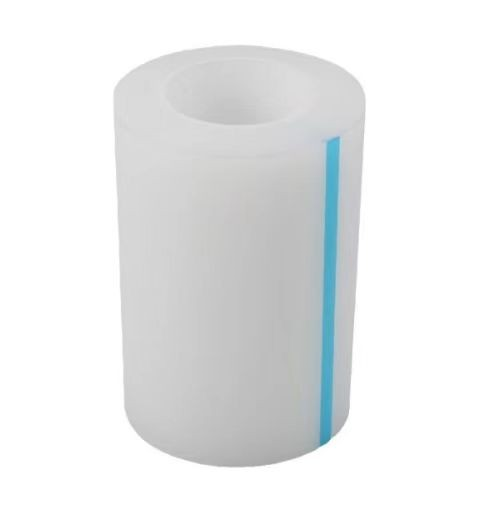
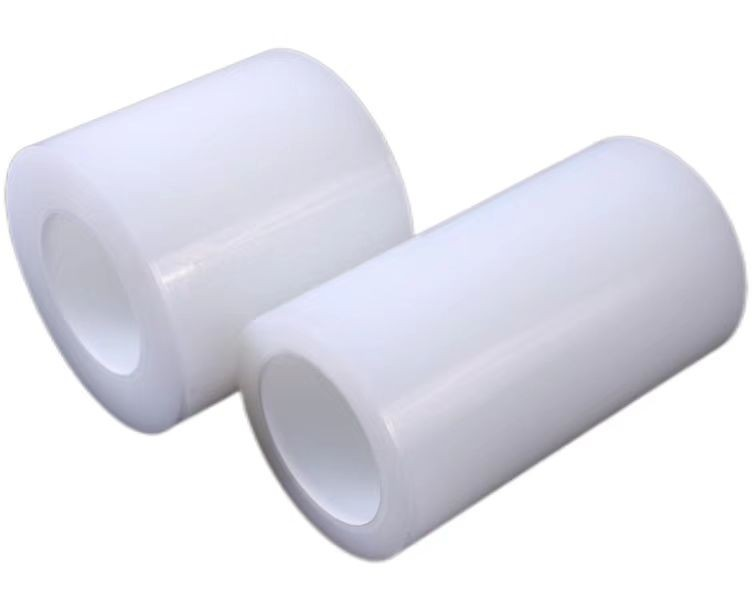


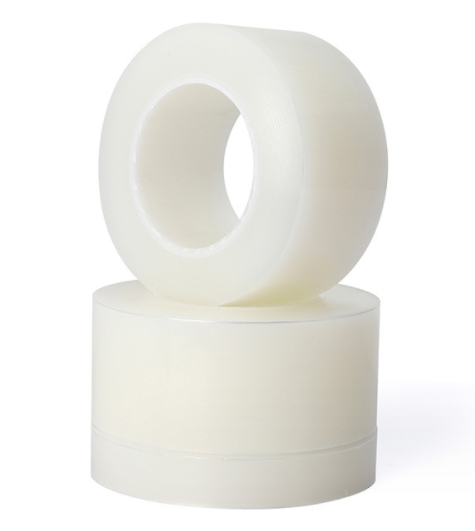
The self-adhesive protective film for home appliances is a transparent or colored film applied to the surface of electrical appliances for protection and beautification. It is usually made of PET (polyester film) or TPU (thermoplastic polyurethane elastomer) materials, with one side coated with pressure-sensitive adhesive (usually silicone adhesive, which has strong adhesion but can be removed easily and leaves no residual glue).
|
Place of Origin |
Zhejiang, China |
|
Brand Name |
Gaosheng |
|
Length |
As your required |
|
Width |
As your required |
|
Color |
Transparent, others can customize |
|
Thickness |
0.03mm-0.2mm |
|
MOQ |
50000 square meters |
|
Leading Time |
About 15-20 days |
|
Packaging |
Carton or Pallet |
|
Business Type |
Manufacturer |
product introduction

Main Uses and Advantages
1. Surface Protection
Scratch Resistance: Prevents minor scratches caused by keys, cleaning tools, pet claws, etc. during daily use.
Fingerprint/Oil Stain Resistance: The surface is usually specially treated (such as an oleophobic layer) to reduce the adhesion of fingerprints and oil stains, making it easier to clean.
Dust Resistance: Seals the surface to reduce dust from entering the gaps or adhering to it.
Wear Resistance: Protects the paint or coating on the surface of home appliances.
Minor Bump Resistance: Provides some buffering to reduce the impact of very minor collisions (mainly against scratches).
2. Renovation and Beautification
Covering Minor Scratches: If there are already some minor scratches on the surface of home appliances, applying a high-transparency film can play a role in covering them and improving the visual effect.
Changing the Appearance (Optional): In addition to transparent films, there are also frosted films, colored films, and textured films (such as carbon fiber patterns, wood grain patterns), which can change the appearance style of home appliances.
Common Application Areas of Home Appliances
1. Refrigerators: Sides, door panels (especially stainless steel or piano paint surfaces), areas near the handles (prone to being scratched by nails).
2. Washing Machines/Dryers: Control panels, machine door glass (partially), top surfaces (when placing items).
3. Ovens/Microwaves: Control panels, stainless steel door frames, sides.
4. Range Hoods: Stainless steel panels, control areas.
5. Air Conditioners: Indoor unit panels (especially those with a display screen or piano paint surfaces).
6. Televisions: Frames (excluding the screen part).
7. Water Heaters: Outer shells.
8. Small Home Appliances: Panels or outer shells of rice cookers, kettles, coffee machines, etc.


Key Points for Selection
1. Materials
PET Film: The most common, with lower cost, higher hardness, good transparency, and good scratch resistance. However, its toughness is relatively poor. If there is a large deformation, it may not be able to recover or may crack, and it may be more prone to minor scratches after long-term use.
TPU Film: The material is softer, has excellent toughness, and has the ability to "self-heal" minor scratches (small scratches may disappear after heating or being left for a period of time). It has good ductility and is more impact-resistant. It is usually more resistant to yellowing and has a better hand feel. The price is usually higher than that of PET.
2. Adhesive
Choosing high-quality silicone pressure-sensitive adhesive is crucial. A good adhesive should:
Have Strong Adhesion: Be able to adhere firmly.
Be Removable: Be relatively easy to tear off and not easy to break.
Leave No Residual Glue: Not leave difficult-to-remove glue stains on the surface of home appliances after removal.
Not Damage the Surface: Be especially friendly to materials such as paint and acrylic.
3. Functional Coatings
Oleophobic and Hydrophobic Layer: Reduces the adhesion of fingerprints and oil stains and makes it easy to clean.
Antistatic Layer: Reduces dust adsorption.
High Transmittance: Important for positions where you need to see the screen or indicator lights (such as control panels).
Anti-glare/Frosted: Choose according to personal preferences. Frosted films are more fingerprint-resistant but have slightly lower transmittance.
4. Size and Fit
Custom Cutting: It is best to choose a protective film that is precisely cut according to the brand and model of your home appliance to ensure perfect coverage of the area to be protected and neat edges.
Universal Cutting: You can also buy large sheets of film and cut them yourself, but it is more difficult, and it is not easy to make the edges look good.
5. Thickness
The common thickness is from a few silk to more than a dozen silk (0.0X mm). If it is too thin, the protection may be insufficient, and if it is too thick, it may affect the appearance and operation (such as the feel of the buttons). Generally, choose a moderate thickness.
Certifications
Our company has approved by ISO9001 International Quality System Certification, MSDS Report, ROHS Report and REACH Report, strictly carried it out in the process of research, production and selling.

ISO9001

MSDS

REACH

ROHS
why choose us
Our company is a professional manufacturer in protective film. It was founded in 2002. We have more than 20 years of production experience. Our company is located in Zhejiang Province, close to Hangzhou and Shanghai.
Rich Experience
High Quality
Reasonable Price
Good Service and Reputation


